
Tours and Excursions in Colonia del Sacramento
Well-preserved colonial city, UNESCO World Heritage Site.
0
Activities
2.1k+
Passengers served
Showing 0 tours
Travel info
The heart of Colonia del Sacramento is the Historic Quarter (Barrio Histórico), a UNESCO World Heritage Site founded by the Portuguese in 1680. It is a charming maze of uneven cobblestone streets, colorful colonial houses and shaded squares, with a strong blend of Portuguese and Spanish heritage. The famous Calle de los Suspiros (Street of Sighs), sloping down toward the river over rough stone paving, is one of the most photographed corners in all of Uruguay.
Strolling through the quarter you'll find the Plaza Mayor, the old Portón de Campo (city gate) with its drawbridge, the Basilica of the Holy Sacrament and the Lighthouse dating from 1857, which offers one of the best views over the Río de la Plata. Everything is compact and flat, perfect for exploring slowly on foot, with sunset over the water as the highlight of the day.
Colonia is in Uruguay, a Mercosur country, so for travelers from neighboring South American countries entry is straightforward. Brazilians can enter with a valid national ID (RG) — a good-condition photo issued less than 10 years ago — or a passport, with no visa required. Travelers of other nationalities should check passport and visa rules for Uruguay before the trip. Always carry the original physical document, as photocopies or phone photos are not accepted at immigration. Arriving by ferry from Buenos Aires, you'll clear a joint Argentine-Uruguayan border control at the port.
The official currency is the Uruguayan peso (UYU), but in Colonia the US dollar — and even Brazilian reais and Argentine pesos — circulate easily in tourist-oriented businesses. Even so, having some Uruguayan pesos on hand gets you the best rate in smaller shops and cafés. Credit and debit cards are widely accepted; pay in local currency when possible, as on-terminal conversion is usually unfavorable. ATM withdrawals come out in pesos (some also dispense dollars).
Uruguayan cuisine revolves around meat, and Colonia is no exception: the asado (wood-fire grilled barbecue) and the chivito — a generous sandwich with steak, egg, ham, cheese and salad — are must-tries. At any parrilla you'll enjoy excellent cuts paired with a glass of Tannat, the red grape that has become the country's signature. There's also no shortage of milanesas, empanadas and pasta, a legacy of strong Italian and Spanish immigration.
To finish, try dulce de leche in desserts and the classic alfajores, and watch locals with their mate gourd always at hand — a social ritual that defines Uruguay. The Historic Quarter is dotted with charming cafés with sidewalk tables, perfect for a break overlooking the river and the cobblestone streets.
To soak up the city's magic, the best choice is to stay inside or very close to the Historic Quarter, where small boutique guesthouses and restored colonial mansions offer charm, walk-to-everything location and the privilege of waking up among the cobblestone streets. It's the ideal option for couples and anyone seeking a more romantic, peaceful experience.
Travelers who prioritize price or are visiting with family will find more modern hotels and apart-hotels in the new town, just a few minutes' walk from the historic center and near the bus terminal and port, with good value for money. As this is a very popular destination for Argentines and Brazilians, it's worth booking ahead for weekends, holidays and the summer (December to February).
The most classic and convenient way to reach Colonia is by ferry from Buenos Aires, Argentina: the crossing over the Río de la Plata takes roughly 1 to 3 hours depending on the vessel, and drops you right at the port, next to the Historic Quarter. You can also arrive by bus from Montevideo (about 2.5 to 3 hours) and other Uruguayan cities, or by car via the country's highways.
Once in town, the best way to get around is on foot: the historic center is compact, flat and made for walking. To explore at a slower pace or venture a bit further, it's common to rent golf carts, bikes, scooters or a vintage car — charming options that are very popular with visitors. Taxis and remises round out the choices for longer trips.
The main thing to do in Colonia is simply to get lost in the streets of the Historic Quarter: climb to the top of the Lighthouse for the panoramic river view, walk down the Calle de los Suspiros, pass through the Portón de Campo and visit the quarter's small museums (Portuguese, Spanish, tile and municipal). It's all on foot, and every corner is a photo opportunity.
Be sure to save the late afternoon for sunset over the Río de la Plata, one of the loveliest in Uruguay, and take a golf-cart or bike ride along the waterfront. Many visitors combine Colonia with a day trip from Buenos Aires, but spending a night in town lets you enjoy its laid-back charm once the day-trippers have left. With more time, you can extend the trip to Montevideo or the region's wineries.
Shopping in Colonia has an artisanal, souvenir feel: along the streets of the Historic Quarter you'll find leather goods (a Uruguayan specialty), wool items, mate gourds and straws, antiques, ceramics and local art in small workshops and craft markets. These are authentic, charming keepsakes — perfect for taking a piece of the city home.
For flavors, go for the Uruguayan classics: alfajores, dulce de leche, Tannat wines and the region's artisanal olive oils make great gifts. Don't expect big malls or outlets — Colonia's strength is its intimate, boutique-style shopping tied to local culture, ideal for an unhurried wander.
Colonia's nightlife is quiet and intimate, very much in keeping with the town's spirit: no big clubs, but rather cozy restaurants, wine bars and craft breweries with outdoor tables and, in some spots, live music in a relaxed atmosphere. The perfect plan is a leisurely dinner that stretches into the evening over a glass of Tannat, watching the gentle bustle of the lit-up cobblestone streets.
Those after a livelier, buzzier night usually pair the trip with Montevideo or Punta del Este, but in Colonia the charm lies precisely in the calm: a short stretch of waterfront, the river breeze and the historic quiet of the quarter make the evening a more romantic than rowdy experience.
Colonia del Sacramento is one of Uruguay's most charming and safe cities, ideal for a relaxed stroll on foot. Here are the essential practical details:
Bring comfortable shoes for the cobblestone streets, sunscreen and a water bottle; the climate is mild, but the sun by the river can be strong.
From our blog
Topic: Neighborhoods and tourist attractions
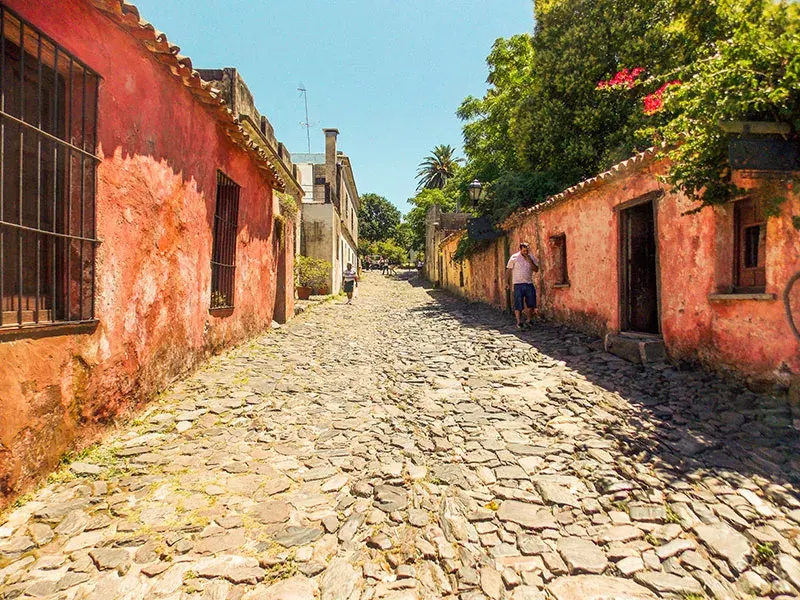 What to do
Explore Colonia del Sacramento: itinerary tips, Uruguayan gastronomy, crafts, and sunset on the Rio de la Plata.
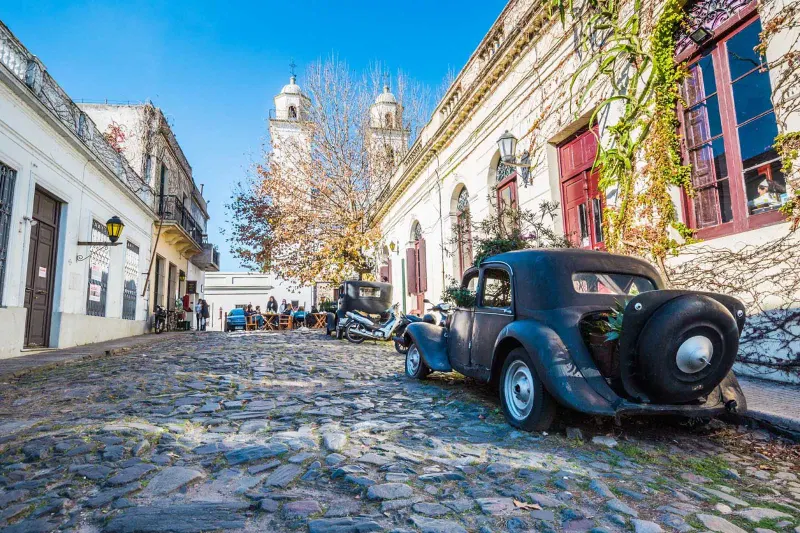 Tourist attractions
Discover Colonia del Sacramento, a historic Uruguayan city one hour from Buenos Aires. UNESCO World Heritage Site, lighthouse, Calle de los Suspiros (Street of Sighs), an…
 What to do
Learn how to get around Colonia del Sacramento with options like bike rentals, taxis, and walking. Tips to optimize your sightseeing itinerary.
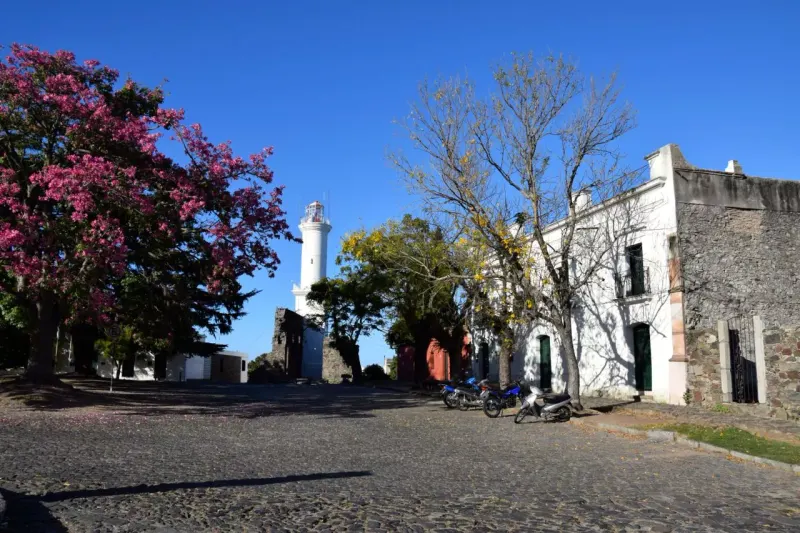 Colonia del Sacramento
Explore historic neighborhoods, beaches and landmarks like the Lighthouse in Colonia del Sacramento, a charming UNESCO World Heritage city.
What to doDiscover the subtropical climate of Colônia del Sacramento: defined seasons, preparation tips and the best time to visit
Complete guide
Colonia del Sacramento, Uruguay, is one of South America's most popular destinations. Well-preserved colonial city, UNESCO World Heritage Site Discover the city with trusted local guides, private transfers and handpicked experiences from Guia Receptivo.
With Guia Receptivo, you can choose the best ways to experience Colonia del Sacramento, from guided visits and city tours to private transfers and full-day excursions. Every experience includes local support, flexible cancellation and genuine traveler reviews.