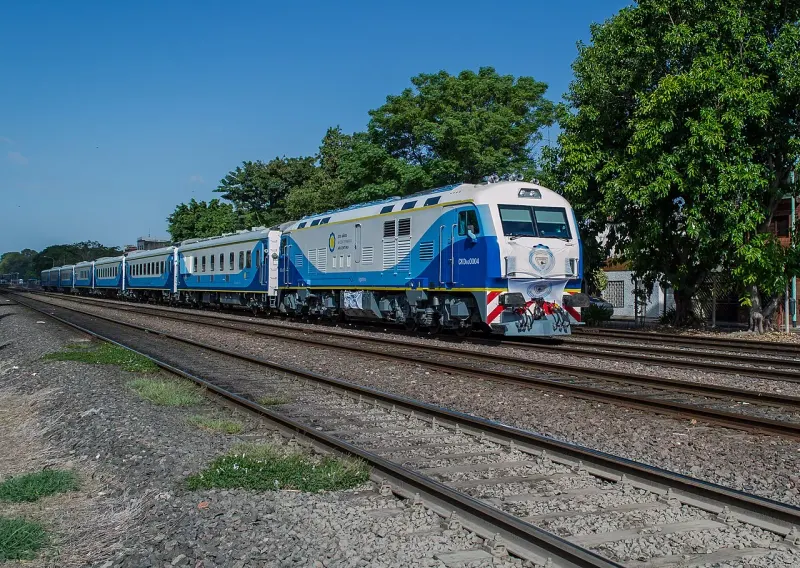
Trains in Buenos Aires: Everything You Need to Know to Get Around
Buenos Aires is considered to be one of the most beautiful cities in Latin America and the world, however, if you think that the beauty is only concentrated there, you are totally mistaken. There are many other cities close to the capital, where beauty is present, making clear the cultural richness that the country has. And best of all, you can visit these places using the train, which is currently one of the most economical means of transport the country offers. Therefore, this article will explore some really cool options for places to visit, and also so that you can make the most of this means of transport.
Main Stations and Destinations
There are 3 stations in Buenos Aires that connect the capital to cities close to the metropolitan region: Retiro, Once and Constitución. The Retiro station mainly connects Buenos Aires to Tigre, a charming city, where it is possible to take a boat trip along the Río de la Plata. Taking a train from Constitución station, you can visit a quiet town called Chascomús, a great option for those who want to get off the beaten track and explore the regions close to the capital. Finally, a destination that is well worth visiting from the Constitución station, changing at Cañuelas, is the city of Lobos, the place where former president Juan Domingo Perón was born.
Practical Information: Timetables and SUBE Card
To find out more information about timetables, prices and destinations that you can visit from each of the stations, simply access the website www.argentina.gob.ar/transporte/trenes and thus stay up to date with everything that is happening in real time, including monitoring whether the lines are running late or if they are closed due to works or other reasons. It is worth noting that, to use this means of transport, you need to buy the SUBE card at one of the metro stations and then top it up. Oh, if by chance your credits have run out, don't worry, because you can board and, when you recharge, the amount of the negative balance will be deducted.
Train and Station Infrastructure
Talking about the infrastructure of the stations and trains, it can be said that both are ok. The stations have a unique architecture, containing paintings and arts, related to some socio-cultural context of the country, in addition to having snack bars, shops and restaurants in some of them. Regarding the degree of conservation of the locomotives, the vast majority of them, I will give a score of 7 on a scale of 0 to 10. As we are referring to a means of transport with capacity for a large number of people and which is in operation for a long time daily, it is impossible for there not to be considerable wear and tear. But even so, the companies responsible for operation and maintenance manage to keep the locomotives within an acceptable range of safety and use.
Safety Tips
Now that you can understand a little more about how trains operate within the capital, it is now possible, on your next trip, to include visiting some of the places mentioned, without needing to invest a considerable amount. What we recommend is to take due care with valuable items and money, because, even though Buenos Aires is a relatively safe city, you can't be too careful and you shouldn't count on luck.